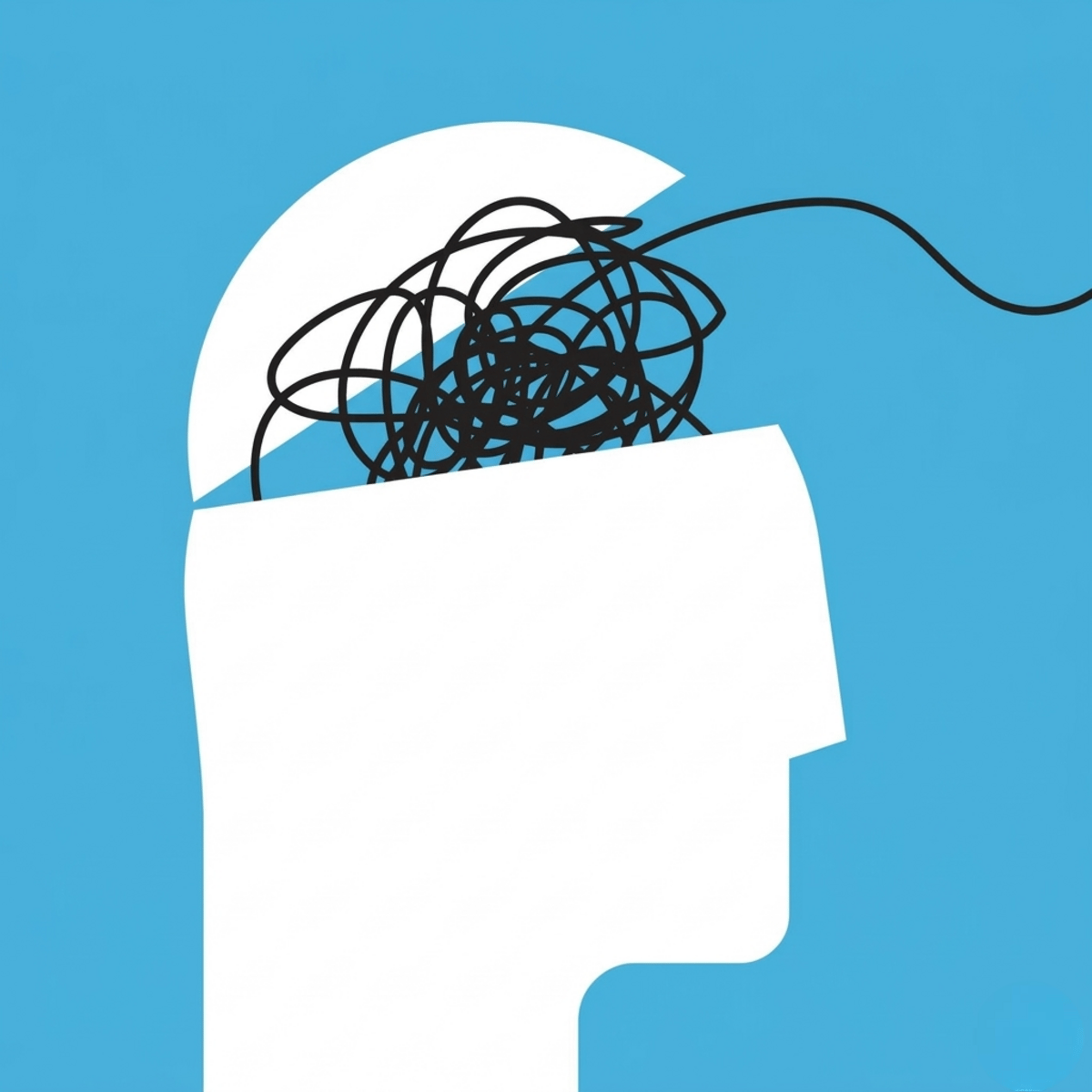
There's something you need to do. You've known about it for days. It's not complicated, it's not even that big but every time you think about starting it, something in your brain just... stops.
It's not that you don't care. You care so much it's taking up space in your head every single day.
That feeling has a name. And it's not a character flaw.
Everything you've been told about procrastination assumes it's a time-management problem. Schedule better.
Break it into smaller steps. Just start. But here's what's actually happening:
Your brain's threat detection system has classified this task as dangerous, and it's trying to protect you from it the only way it knows how — by making it feel physically impossible to begin. This isn't a willpower failure. It's your amygdala doing its job. Badly, but genuinely.
THE REAL EXPLANATION
In most brains, the prefrontal cortex, the part that handles planning, decision-making, and telling your amygdala to calm down which can overrule the emotional alarm when a task feels uncomfortable.
It essentially says, "this isn't actually dangerous, let's do it." ADHD brains have a noisier connection between these two systems. The override doesn't fire as reliably.
A 2020 review in Neuroscience & Biobehavioral Reviews confirmed that ADHD involves impaired emotional regulation tied directly to amygdala reactivity. Not just attention deficits.
The emotional charge your brain attaches to a task gets louder than it should, and the filter that quiets it doesn't show up on cue.
So when a task carries any emotional weight, potential embarrassment, uncertainty, the fear of doing it wrong, your brain doesn't experience it as "mildly uncomfortable, push through."
It experiences it closer to an actual threat. The result is what so many people describe as being stuck, fully aware of everything you should be doing, completely unable to cross the gap between intention and action. That gap isn't laziness. It's the space where your threat system and your planning system are fighting, and the wrong one is winning.
WHY EVERYTHING YOU'VE BEEN TOLD IS WRONG
"Break it into smaller steps" assumes the problem is overwhelm. But if the task itself has become emotionally charged, if your brain has already decided this thing is threatening, a smaller version of the same threatening thing is still threatening.
You can't think-list your way out of an amygdala response. Telling someone with ADHD to "just start with five minutes" is like telling someone with a broken leg to try walking more slowly. The advice isn't wrong in theory. It just doesn't touch the actual problem.
WHAT ACTUALLY HELPS
Here's what actually works and it sounds almost too simple. Tell yourself you're not going to do the task today. You're only going to prepare for it.
Open the tabs you'll need. Write out exactly what needs to happen. Get everything laid out in front of you and then stop. That's it. Promise kept.
What usually happens next is the entire point. When it's all laid out, the task suddenly looks smaller. The dread quietly lifts. Because you told your brain this doesn't count, the threat system stood down. There was nothing to protect you from.
No alarm fired. And in that window when the amygdala is finally quiet your prefrontal cortex can actually do its job. The task doesn't feel impossible anymore. It just starts.
This is what working with your threat system looks like instead of against it. Not discipline. Not a better calendar app. Just removing the emotional charge long enough for the right part of your brain to take over.
You're not someone who can't do things. You're someone whose brain learned to treat certain tasks like threats and nobody ever explained that to you, let alone told you it wasn't your fault.
So go set up everything you'd need to do and let us know what's the thing your brain won't let you start? Saying it out loud is sometimes the first step.