
It starts with a reasonable thought.
You're about to start the real thing. You sit down. And then you notice something small. It'll take thirty seconds.
Except it doesn't.
Forty-five minutes later you're doing something you never planned to do. The original task hasn't moved. And somewhere in your chest there's that familiar feeling of watching yourself from outside your own body, wondering how this keeps happening.
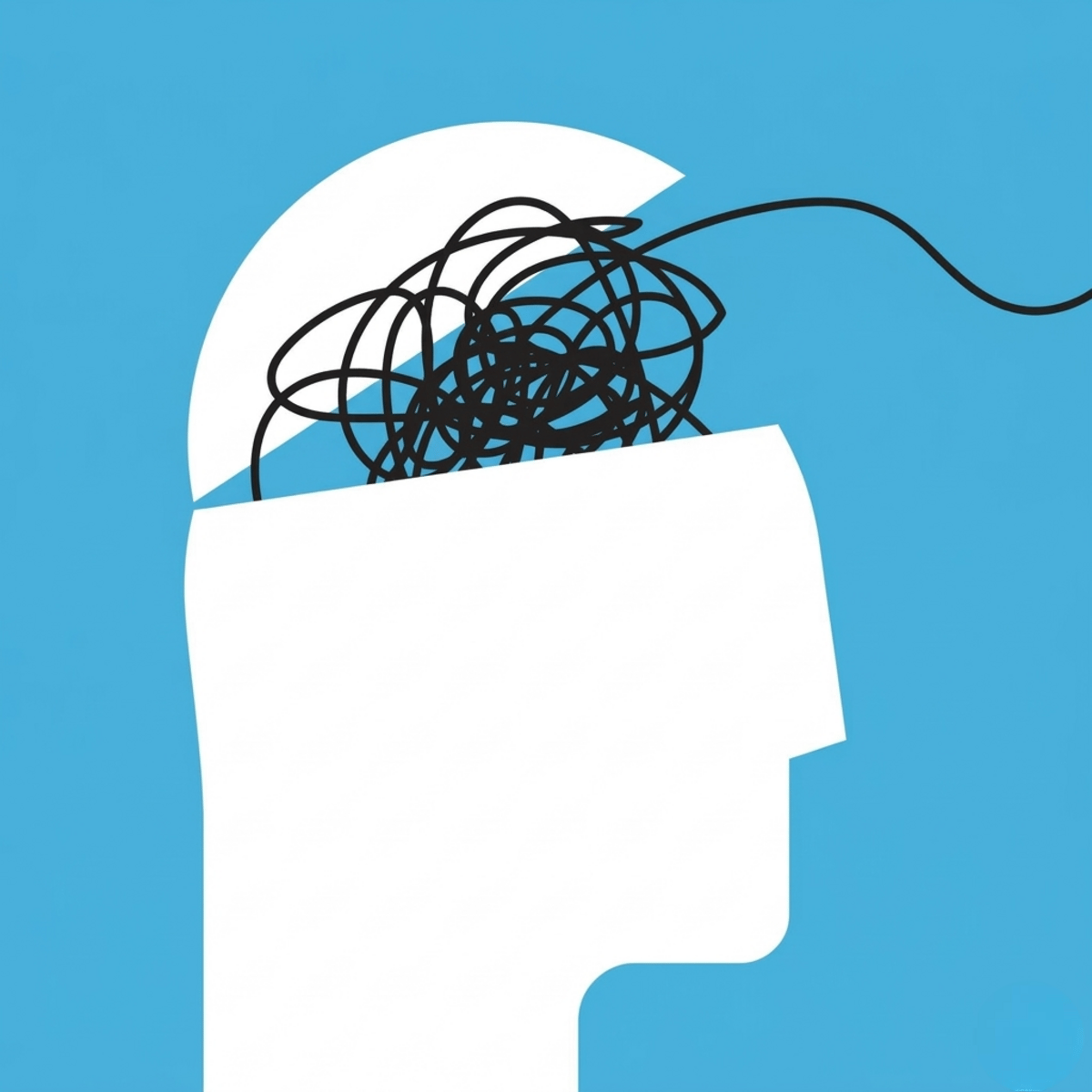
This isn't a focus problem. It's a working memory problem with a dopamine engine underneath it.
Working memory is how your brain holds an intention in place while you move through the world.
For most people, it's sticky. They get up, do a small thing, come back, and their original plan is still there waiting.
For us, it's not sticky.
The moment attention shifts, even slightly, the intention drops. Not the general awareness that work exists. The specific mental readiness. The thread. That's what falls.
And here's the part that makes it worse.

The brain doesn't just lose the thread. It replaces it.
The ADHD brain is always scanning for something that gives a quick dopamine hit. The original task is uncertain, effortful, hard to start. But the small thing you just noticed?
→ It has a clear beginning
→ It has a visible end
→ It feels completable right now
That's exactly what a dopamine-hungry brain reaches for.
So the swap happens. The small task fills the slot the real task was in. And because every individual thing you did made sense, there's no alarm. The cup needed to go back. The thing needed fixing. Each decision was defensible on its own.
It's only when you zoom out that you see the wreckage.
There's one more layer.
Every time you switch tasks, your brain pays a cost. It takes real mental energy to re-enter the original task, reload what you were doing, and get back to where you were. For the ADHD brain, that cost is higher than average.
So after three or four small detours, the return cost is so high that the brain just... refuses. The original task starts to feel impossible. Not because it was impossible. Because you made it expensive.

So what actually helps?
What actually works is giving the brain a way to notice things without acting on them.
We call it the Capture-Return-Address method. Three steps, and they take less than ten seconds each.
CAPTURE. The moment a random thought or small task pops up, write it down. Anywhere. A sticky note, your phone, a scrap of paper. Get it out of your head and onto something physical.
RETURN. That's it. Go back to what you were doing. The thought is safe now. You don't have to hold it anymore.
ADDRESS. At the end of your session, look at the list. Handle what's on it then.
That's it. No fighting your brain. No pretending the distractions don't exist. You're just giving them a place to wait instead of letting them hijack the wheel.
🎧 Podcast

A deep dive into ADHD, focus, and modern distractions - covering the science behind attention, dopamine, technology, and practical ways to improve concentration. It also explores common ADHD treatments, focus tools, and how everyday habits affect our ability to stay attentive.
The loop isn't going to disappear. But now you know why it happens and you have one real tool to slow it down.
Try CRA this week. Even once. See what your list looks like by the end of the day and let us know what's a small task that's eaten hours of your life more than once?
Thanks for reading
See you in the next issue!

The Spiral Brain